Erasure, Truth and A Screen Free Writing Experiment

IMG_7039

It’s been awhile since I’ve written. I know. Almost a year. I won’t blame it totally on the election hell results. I also tore my ACL a few months after the election, ironically, in my attempt to get outside and enjoy some nature, get my mind off stupid politics. But back to my point today. I’m here, and I want to talk about erasure and truth and an interesting experience I had writing a letter.

I’ve been thinking about erasing lately, not like pink pearl erasing (although you will soon see that kind of erasing matters too). The election and daily tweetstorm aftermath of falsehoods got me contemplating the idea of erasure and turned my mind to examine why honesty matters and why it’s sometimes so damn hard. I started thinking about how we erase people out of our lives or how people erase us out of their lives or how humans have a special knack for erasing the parts of a story that make them look bad. I’m guilty of it- we all are. We are at the dawn of a new era of “truth telling” in our country, and wanting to know what’s true is on the radar. My thinking about erasure probably started with the election but has since evolved to other areas of my life, a friend telling me that another friend wasn’t being honest, me being less afraid to say what others might find offensive, clients with partners that pathologically lie, me recently watching Ken Burn’s Vietnam War documentary (thoughts on that are for another day, but boy, did it reveal how commonplace lying and deceit on a grand scale can be), and now this. I’m back to writing, and as difficult as that can be, it feels good to be grappling with my experience of truth.

So, here’s something. I enjoy looking at old documents, stuff written before erasers, white out, and the delete button were in our everyday lexicon. For example, I like looking at edits from authors from the 19th Century. These people were writing when big changes in the editing world were taking place- publishing was much easier, distribution was faster, and writers were more visible about the way they worked and reworked pieces. Like I said, this was before the delete button. Did you know that Walt Whitman spent 40 years revising and editing and republishing Leaves of Grass? The first time I discovered his rewrites, with lines crossed through, words written in the margins with various dates, I felt a new freedom as a writer with my ever-evolving process. Emily Dickinson inspired me in a similar way. Think about all of her little scraps of poetry. She carried a pencil with her and wrote her notes and her poems with true transparency on whatever slip of paper she could find. Her treasured writings are a window into a vulnerable, powerful and uncensored mind!

But think about this. What if everything you wrote could only be done with pencil and ink? Does that make your heart beat a little faster? You would have to get more comfortable with first takes, sounding imperfect, with marking out and having your reader see your mark outs, or you would be forced to cease all written communication completely. I think the relationship to erasure and editing these writers from the past encountered were unique. We can actually track the development of their minds better than writers of today because editing was not something that could easily be disguised. It didn’t seem to matter as much either. And guess what/no surprise? We have a lot of amazing art that comes from those pre-delete days. (Side note to self: Julie, trust your first takes more.)

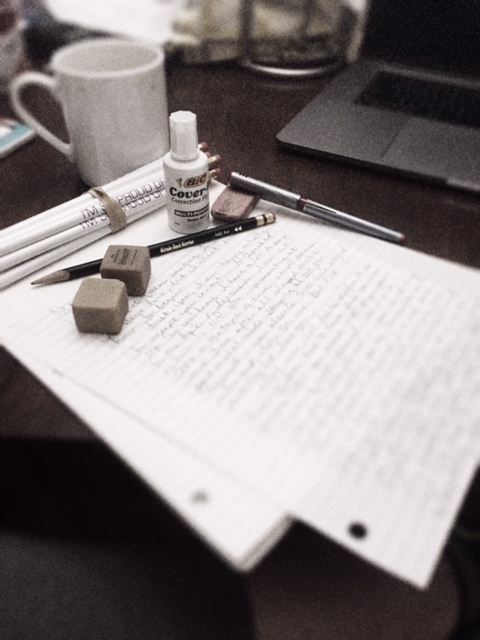
I decided for this essay I wanted to take a photo of me writing something in the way I used to write things – see pic above. I thought of using my Black Warrior #2 pencil, but then I kind of dreaded all the erasing I might have to do. I am an edit until the last possible second kind of gal. I had one of the first laptops in the 80s and was in awe of how easy it was to write, delete and rewrite. But to take my picture, I would not only need to write something by hand, I would have to write something meaningful to get the real feel for it. I had an important email I needed to respond to, and I kept thinking, what would it be like to write my response via letter verses email or text? So, I turned off the computer, picked up my pencil and put my thoughts to the page.

First, I actually think the overall experience was easier. Surprisingly, I think it would have taken me longer to write an email. And if I had used texting, I know the emotional weight could have been completely lost in the brevity and my overuse of happy emojis. While I did have a feeling of annoyance at having to hold my pencil and press in short strokes over and over because I don’t write by hand much, at least not letters of significance, what I noticed more was that I trusted what came out, either that or I was too lazy to make changes. But I think it was the first. I think my words came with less effort because I didn’t want to and wasn’t planning on doing a lot of erasing. I accepted what is and was and came to be as it flowed from mind to hand to paper.

The exercise made me think of this artist that I asked to do an art lesson when my son was in 4th grade. She wanted the students to focus on what she called their first art, their mark. She was fascinated by handwriting and what it revealed about a person. She separated the class based on just a few words that each child had written. I knew these kids pretty well having done art with them for the past five years and was astounded how accurate her groupings were- there were the perfectionists with their exact marks, the people pleasers with bubbly, cute marks, the introverts with tiny, lightly written marks, the extroverts with loud, heavy marks, and the weird kids that she secretly called the true artists with irregular, nonsensical marks (my kid was naturally in that group). Back in the day, I would have been in the people pleaser group. But I’ve done a lot of work on myself and my people-pleasing tendencies, and as I wrote my letter, I only stopped to erase when I misspelled a word, wrote something so messy it was illegible or at the bottom of the second page, when I was having difficulty ending the letter, I erased several times trying to close with something that didn’t seem rushed or false. That was hard. I would still like to add more balance, more qualifiers, offer a tidier, bubblier ending. Ahhh.

And that was my second realization- my closure was somewhat forced because I had actually run out of room on the paper and didn’t want to go to another page, something that doesn’t happen on email. As I neared the end of the physical margins of the paper, I began to anticipate wrapping up my thoughts and felt some relief that I didn’t have to keep explaining my side. It felt good to accept that the space was full. I was grateful for the boundary of the page. The endless amount of space email allows us doesn’t give that visual reminder that we sometimes need, that it’s okay to end.

Apparently, someone knew that an 8.5 x 11 sheet of paper is just the right amount of space. Of course, as it turns out, that magic number is no coincidence. It goes back 400 years to the wooden molds that papermakers used to form a sheet of paper. The size of the molds was based on the average length of an outstretched arm, which is 22 inches. Two out stretched arms could handle 44 inches. The finished paper would be cut into lengths of 11 inches. It was efficient and practical. Over time, the standard dimensions of most paper changed to include a width of about 8 inches to fit type set and the best spacing of words across the page. I love this real-life metaphor. The size of a sheet of paper is connected to how much a human can literally hold and read.

I won’t go much into my letter, but all to say, it was written to someone that I felt was erasing or at least heavily editing me from an important part of her narrative, and it hurt. What struck me is how common this pattern is within ourselves and each other, but usually we don’t have a witness to bring us back to, “Hey, you just erased that person and that moment completely out of your story? What’s up with that?” As a therapist, I get a little more freedom than the average person to speak to the erasures I notice. I often find myself saying some version of, “I know you aren’t talking about this, but your mother is coming to mind right now!” It seems cliché, but it can be so important to highlight erasure when we hear it.

Unquestionably, the concrete experience of writing by hand was transformative. I was able to write a difficult letter in pencil where erasing was actually so cumbersome that I only used the erase option a few times, making the entire process much less taxing and truer to what I wanted to say. Now I have to find an envelope and a stamp and wait until Monday to mail it. All of that distance eases my anxiety and makes me feel more at peace about sending it, which is a much different feeling than pushing the send button on an email or text. It’s not like either option is easy, but I’m grateful to have tried something new to keep my process more congruent to my internal reality.

So, my ending thoughts for me and for anyone still listening:

A) Don’t be a liar like our terrible President who erases and edits at free will regardless of the truth.

B) When you erase people and experiences out of a story, ask yourself why? Are you simply keeping boundaries? Are you even aware? Are you hiding something from yourself or the other person that is unflattering? Don’t be afraid to put the uncomfortable parts out there. People are much more forgiving and frankly, more interested in the messy truths of life than our polished and filtered swagger.

Oh! And,

C) Make your mark! Write a handwritten letter this week.


Use Your Words

You know the saying, “Use your words.” Adults typically say that to small children acting out without words. But maybe we should add some caveats. “Think about how you use your words.” Or possibly, “The words you use can change your life.” Some of us, frankly, would love to stop acting out and would relish the chance to use our words and have them heard.

This was a recent Facebook post of mine:

you know what women like? what really churns their butter? when a person, but really not just any person, a man, especially a white straight protestant man, a religious, dogmatic, raised-to-be-in-control man, can acknowledge, without defense, his unknowing, his failures of understanding, his participation in the system, a man who can humbly take the leap of trying, of trying to feel the world most women and children live in, to think of the experience minorities (as in different from his sexuality, gender, race, religion) live in and realize wow, it’s time for me to slow down and listen because i am ignorant of that world. This woman anyway is into men like that. I’m hoping if anything good can come of this election season it will be from the growing voices of the silent minority whose worlds are starting to be considered if only because of the bravery shown and brutality suffered by the other that is harder and harder for such men to keep hidden. even if just one privileged man (please dear God!) who thinks he knows something about the world of the other (but who actually never asked) is open to change, it will bring me some solace. and to you men out there who are out there trying, and to whomever taught you, I seriously love you!

Okay. First of all, I know I used a lot of words. I guess I’ve been storing them up. Most of my posts are short and sweet, stuff like, TGIF it’s been a long week, but not that week, not this presidential season. I’m joining the ranks of dysregulated people out there who are trying to put some words to the insanity of what is swirling around our country’s political scene. And by last week, I had had enough.

A friend of mine surveyed her book club after the video of Trump and Billy Bush’s vulgar 2005 exchange about sexually assaulting women was released by the Washington Post on Oct 8th. There were six women and one man present at book club that night. “Who here has experienced unwanted sexual touch?” All the women (not the man) raised their hands. Of course, many men have been sexually violated- just not as many. Because let’s be honest, men are not having their bodies groped in a free-wheeling “grab them by the p—y” kind of way like women. My friend was too uncomfortable to share the how and how many times this had happened to her. I understand that.

I work with sexual abuse victims. And yet I could never have anticipated to warn my clients, to predict the re-traumatization that would happen this election term from the mouth of an actual presidential candidate elect. Of course, who could have imagined it? And now, due to the constant barrage of violating words and phrases circulating our feeds, the inconceivable has happened and the trauma seems inescapable.

But I’ve noticed a lot of people are doing something really important in response. We’re talking. And in my profession, talking can cure, talking can get people to change their behaviors because it gets them thinking, connecting; talking makes people see what they might otherwise ignore. We are talking more frequently and more honestly than we ever have about the experiences of the marginalized, and our words are creating validation and change.

Part of the reason why talking is making a bigger impact is the sheer volume of words is greater, higher, louder. And the volume is getting some of those white privileged men I was talking about in my post, to take note. You have to be living under a rock to not know about #blacklivesmatter because the crescendo has been building loud enough to permeate the psyche of our nation. This most recent incident has once again brought sexual assault and the world women live in every day back into focus. These most recent moments are made possible because of the many tragedies over the past several years that have increasingly been given voice. We are tired of not being able to use our words, and we are tired of others using words that don’t represent the truth. Who would have thought we would be adding #nastywoman this past week to words we claim as our own? That’s a triumph.

So yeah, a lot of people have had longer facebook posts this past year, and not just any people, but people of color, women, people that didn’t have a voice until very recently in human history. And you know what? Despite what Trump thinks, his words are working, but not as he planned. And our words, our precious, dysregulated words scribbled on the page, typed and retyped onto social media, in texts, words spoken aloud to the ears that will hear are creating real waves, waves big enough to break barriers many thought unbreakable. Our words are going to usher in the first female president.

So yeah, keep posting people! Use your damn words, over and over. Use them well.

Know Your Triggers

trigger-pic


“Mom, if you picked your friends by those that don’t trigger you, you realize that you wouldn’t have any friends?” (said in dripping sarcasm)

“My friends said to me today, ‘Is Ms. Williams’ triggering you?’” (insert very cute teenage boy laugh followed by deep growl here).

These two sentences were said in my house today. Apparently kids are growing up with a completely different language than I knew or could imagine. I had to go to graduate school to hear the word trigger, understand what it meant. I then had to pay for a shit ton of therapy to really identify my own personal triggers, and well, ultimately, try to not let them trigger me so much. I think kids that are already using this kind of language are likely going to be better off in relationships. And I’ll tell you why. If you know your triggers, your energy can go to you and those you love, not to recovering from internal and external bombs constantly being set off by unknown triggers. I really value this trait in my friends, and, in fact, I’m triggered by people that don’t and can’t speak freely of their triggers. They don’t feel safe.

But let me back up. First, in case you actually don’t know, then you need to be told that a trigger is something (and it can be anything!) that releases or stimulates an automatic strong emotional response. Like you smell Ralph Lauren Polo cologne walking through the mall and are suddenly sad because that smell triggers the memory of your 8th grade boyfriend who wore Polo and broke your heart. Often, the response isn’t fitting to the situation because triggers are usually connected to a story from long ago. The biggest triggers often a direct line to our biggest traumas. The trigger turns reality into something it actually isn’t, clouding your vision of what is.

Take the picture above for example. Posted today. (this is my distorted version) In real life, it’s a beautiful wedding day photo at Duke Chapel. But I don’t only see that. I see something unsettling, stark and painful in the midst of good, somewhere between ghostly and nostalgic. It’s my younger brother’s wedding day where my two boys served as ring bearers. These facts make me happy for him and his wife.

And then there are the triggers. Let’s start with Duke Chapel, the location is a trigger. I don’t have the energy to spend any time on that one because I can barely right the word with the correct spelling. If you know anything about Carolina and Dook, you might have an idea. Okay. I’m half joking, half avoiding the real trigger.

What comes to mind is the sad memory that this day, less than an hour after this picture was taken, was the last day I would talk to my oldest brother in person, while we walked together halfway back up the aisle after pictures were taken. His funny and contagious laugh stands out in my mind as he described his weight gain thanks to another attempt at quitting smoking. That memory, triggered by seeing the picture, creates a series of internal responses so strong that now I’m completely feeling shutdown and won’t be able to think for a few minutes, maybe the next day will be hard. I’m not sure because it’s a bad trigger.

The second half of the walk down the aisle was with my younger sister, where my husband and I encouraged her to check out Planned Parenthood, another triggering story but one with a good ending at least.

And finally, there is the general concept of church and family that this picture triggers. I’m reminded with the speed of a camera’s flash to many years of religious/spiritual dogma, confusion, silencing. The only picture I have of my entire family is from that day, inside that Chapel. And that picture sits beside the poem I wrote for my brother’s funeral.

Here’s the deal. If I didn’t know any of those pieces about what triggered me, or wouldn’t let myself know in the way that we are able to block knowing at times, then when I saw this picture on Facebook, things could have come unglued later for me relationally. What if my husband and I had gotten into a big fight over me not putting the laundry away (this is completely hypothetical of course!)? Maybe I would have had no clue what story was happening underneath the moment. I would have thought he’s just being nagging and mean. We would actually think our fight was about laundry when, in fact, my emotionally unregulated reaction to his disappointment about not helping out was really about the multiple unprocessed triggers that went off the moment the picture came across my screen. Our night could have ended poorly.

Instead, I could say to my husband when he got home that night, “Did you see the anniversary picture? It’s hard to believe it was that long ago. Geez, that whole day was triggering in so many ways (maybe I talk about how, maybe not), but it was a great reception and our boys were so cute weren’t they?” That moment ends. We both recognize the layers in the picture. I have energy to get my laundry put away, and we go to bed happy. Why? Because I know my triggers. So if you don’t know yours, be open to learning. It’s well worth the investment.

Summer’s Over, Time to Eat!

Okay. So I took a really long summer break from my blog, but it was necessary. I needed to focus on my other writing and to figure out what in the heck I wanted to really use this space for. With a little tweaking (more to come), I have landed on the angle of sharing thoughts from the perspective of well, being mental and living life. What that means to me as a person with my own mental health issues that is also submerged in the mental health of others is life from this view is unique and needs to be talked about as much as possible. We’re just all better off when we talk about our mental health struggles. I plan to continue with themes from the personal to the political, and I hope to offer more insight on everything from depression, anxiety, trauma, addiction, eating disorders, self-harm, adhd, bipolar, women’s issues, parenting boys, parenting in general and relationships just to name a few! Let me know if you have a particular topic you would like me to explore, and I’ll give it a shot.

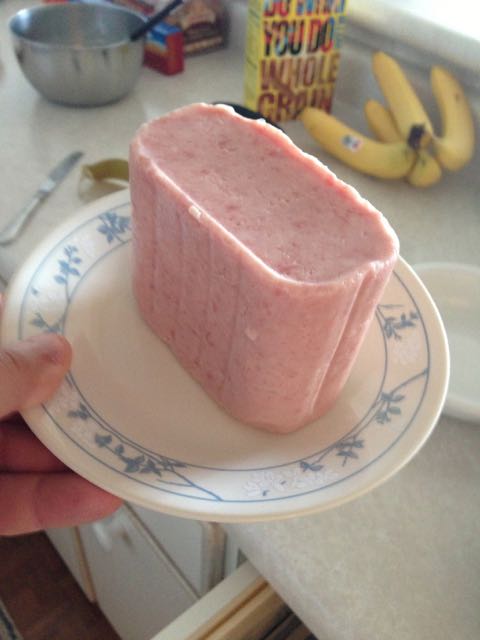
For tonight, I’ll keep it short and end with a personal triumph. I’ve made five weeknight dinners in a row for the family (starting last Wednesday, skipping the weekend, and ending tonight)! Nothing amazing, some of it average (frozen cheese ravioli, salad and bread) and one kind of below average (bad experiment with the new instant pot and a pot roast), but that is no matter. The point is this: in the past week I have pushed past feelings of overwhelm, disorder, indecision and perfectionism to complete what I thought was a simple every day task (thanks Mom and Martha Stewart and the church I grew up in with all the amazing and passionate cooks for setting the unrealistic expectation that every dinner needs to include a multi-hour prepared meat, two starches, dessert, table cloth, napkins and at least two utensils)! I never cooked until I was married, not really cooked, and it’s been an uphill battle for the last twenty years. Don’t get me wrong. When I want to cook, it can be amazing. I just happen to only want to cook pastries. Add two kids with very different appetites and well, it’s been a recipe (haha) for disaster. I have much more to say on this topic. But that’s all for now. And no, I did not serve them spam this week. But when we are in Hawaii, we do have a traditional spam breakfast, hence the beautiful picture.

Good luck out there feeding yourselves!


Family Historian

she saves scraps,

keeps track,

stashes stories.

she knows timelines,

characters,

and scenes.

she hoards pictures,

assembles words,

pools proof.

her clipped collection,

invariable and incomplete,

the family file

she can’t seem to

delete.

jsc 5-10-16

Game of Therapies


As preparation for tonight, I re-binge watched the first five seasons of HBO’s Game of Thrones. Have you ever noticed how many candles they use? I mean, my God, the candle budget alone! But seriously, I am wondering why, when I barely have enough time to return a text message, why did I make room for 50 hours of tv viewing? There is no doubt something for everyone in this series, which is part of its genius. So what does it do for me? Watching all of these people waging gruesome civil war, revealing their pathologies along the way. What are they fighting for any way? Well, to reign on the Iron Throne of course. And in case you didn’t know, the Iron Throne was forged from the surrendered swords of 1000 soldiers way back before the Mad King was ever slain by the King Slayer. It’s ironic (ha!), the most revered, desired and seemingly indomitable throne was created from the act of acquiescence.

Surely there is a lesson somewhere in there for me- my version of a 1000 sword throne. I think you have to be a strong person to surrender. It takes courage to relinquish the ideal you were originally striving for. The scene that flashes across the screen is the moment I was nearing the end of labor with my first son. My plan of course had been to ace labor and delivery. I had watched a 24 hour marathon of TLC’s A Baby Story in preparation. I was genetically set up to excel at birth. My mother had delivered nine full-term babies with not an ounce of pain relief or complication. I was the almost exception to her perfect stats. She likes to tell me that I was the one that was vacuumed and forcepped, who refused to come. The doctor was ready with the knife, but I finally yielded. At the last moment, this 9lb sputtering and screaming baby girl called me made her way into the world. Now here I was 28 years later and over 24 hours into my own hellish baby story. My blood sugar levels had plummeted, I was vomiting every few minutes (the epidural relieved the pain and gave me intense nausea), and I had been pushing for what felt like days. My doctor came close to my face, her hand stroked my wet hair and she whispered in my ear without judgment or urgency, “Do you want to keep pushing or do you want me to go get him?” I literally had no strength left. My son was in no hurry. I gave myself permission to surrender. As it turns out, the minute I said, “Yes, please go get him,” tears running down my face, I felt an incredible wave of peace, my strength had come back to me. And he was delivered, all 9.8 lbs of him, by c-section, 15min later. How often does this happen in life, how often do we allow a stronger self to emerge as a result of letting go of our original plan?

 My near thirty year saga with depression has the same core theme, will I fight or surrender? I don’t like pitting these against each other. There are many things I have done and continue to do to fight this illness, to keep depression’s ugly head chopped off and on a spike. Surrendering is the one that makes the least sense. Doesn’t that mean giving up? My fight with depression feels like a Game of Therapies. Ask anyone who has struggled with major depressive disorder or chronic depression, “What have you done to beat it?” First that person should punch you in the face for asking such an asinine question. But I promise you the list will be long. Likely there are numerous medications that have been tried, hopefully at least one or two have worked, body therapies, major life changes, relationship adjustments, dietary shifts, spiritual explorations, multiple counseling attempts to uncover all the dark layers, light therapy, exercise and supplements to name a few! My exhaustive efforts have given me an impressive accumulation of wins, wins that have offered an extensive measure of valuable change. I have much more cognitive fluidity god dammit! But before I knew I had depression, when I felt my worst, when exercise and dissociation wasn’t doing the trick, I would open up my journal and write. It worked pretty well. I could feel completely collapsed on the inside and when I picked up a pen, and put a few words on paper something shifted.

Depression is like those bloody White Walkers, springing back to life with menacing blue eyes when you think you’ve killed it. It’s crazy-making and scary! This is why surrendering feels like a death sentence. But I’m starting to think of surrendering in a different light, a comrade instead of an enemy. What if it means time to give something new a try? There is no one answer to depression. In my life, depression kind of looks like the hideous side of Game of Thrones, a multi-waged, almost can’t look, battle of failures and triumphs, with hundreds of characters in play. Writing feels like the great surrender, stop fighting so hard and write my psyche urges! I’m semi-in-touch with the strength that I feel from the writing process, but it doesn’t necessarily usher me into the Red Keep and onto the Iron Throne. Maybe I haven’t relinquished enough swords. But with each effort I make to express my inner world, I allow a different me to emerge. Depression is more insidious than my first association to labor and delivery. It doesn’t end with a cute baby! But damn, it can break a person down in the same helpless way, crush the perception we have of ourselves, the way we want others to think about our strength.

When I choose to write as a way out, I sort of feel like Daenerys Targaryen on her wounded dragon flying out of the pit of death at the end of last season. You see it in her face when she realizes the dragon is her only option. But she must approach him, command him to fly, and risk not knowing where she will end up when she gets on his back. And so here I am. It’s the opening of a new season, and I’m setting out to see what happens when I surrender to the part of me that says speak your voice and write. I’m trusting when I lay my sword down and pick up a pen, new strengths will emerge, readying me for the darkness that lurks in the distance.


HB2, the Shameful Hate Law of NC

I had been thinking about love, how difficult it seems for people who use online dating to find it, and why that is. I have clients looking and longing for a partner. I love love and believe every human is entitled to know what it feels like to sit across from someone who sees all of you and has your back. That was around Valentine’s Day. And then April hit. April got off to a rough start for my home state of North Carolina. First I suffered through the pain of my Tar Heels losing the NCAA tournament at the buzzer to Villanova, that seemed unbearable in the moment, and then I heard about HB2*, the law passed by NC Governor Pat McCrory in the midst of March Madness in a one-day special session. House Bill 2, or as some refer to it as Hate Bill 2 has created a shitstorm in its wake. Here’s a good article from the Atlantic describing the current measures of the law.

At its contentious core, HB2 requires transgender individuals to use bathrooms in government facilities that match the gender on their birth certificates. What? And how in the world do they plan to enforce that? It also allows for government-supported discrimination against LGBTQ individuals by permitting private businesses to set their own rules, denying the right to sue. Huh? Am I still in America? And just for added measure, it prevents local governments from raising the minimum wage. As it turns out, when law legitimizes hate and fear, our ability to find love is compromised. Now instead of thinking about love, I was thinking about hate. I felt ashamed to be from NC.

As I scanned my Facebook over the weeks after it was passed, I was relieved to see many of my friends and family members speaking out against HB2, but I knew that wouldn’t last. First there was the high school guy who re-posted this fucking clown’s insight. And then there was the well-intended old church friend, who posted this article about the need for separate transgender bathrooms from the perspective of a rape survivor. That bothered me. In the past two days, Triller’s article has been referenced in the Washington Times and other places as support for keeping transgender people in the proper “God-given” restroom. Her description of “the countless deviant men” waiting in the wings like transgender-opportunists is hyperbole and overshadows the actual issue of the rights of the transgender community to use a restroom that matches with their gender identity. Sharing your story of sexual abuse is brave and vulnerable. Using that story as reasoning for upholding the discrimination of LGBTQ rights is problematic.

Sexual trauma of any sort is devastating. I was a victim of childhood sexual abuse. I understand the fear of who does or doesn’t have access to me when I’m out in the world. I know the fear of entering a bathroom. In fact, before doing a lot of my own therapy, I had (and sometimes still do) a typical routine when alone in a bathroom- check under all the stalls, pick what I deem the safest one, quickly undress (I’m fast!), hold my breath, squeeze my eyes, cover my ears and try to force my pee out without spraying myself or the seat, all while I am trying to peek for new feet to enter the stalls next to me. A history of being physically or sexually violated causes real issues for any man or woman and not just in public bathrooms. If anyone understands this, it’s the LGBTQ community. However, the actual problem people have in allowing transgender persons into a woman’s restroom isn’t really about bathroom privacy. It’s about fear, fear of the other and most importantly in Southern states like NC, fear of the unregulated black penis. Yep.

There is a “fear of rape” culture that lingers in the Southern psyche that has spread well outside the Mason-Dixon line. I’ve lived in Seattle for over 15 years, and I’m grateful to not feel it in the same way here. In the South, it’s taught, directly, indirectly. It’s generationally passed down. And any Southerner who is honest knows it stems from the belief that black men are predators of white women. I grew up in Durham, NC, and by the time I was 12, I could have drawn lines on a map of where those predatory black men supposedly lived and where it was safe for good white girls like me to tread. I don’t even know how I knew this, but I did. These roots, the fear of black men violating white women, goes back to Jim Crow laws to Reconstruction to the Civil War to slavery. The thought that a white woman would ever willingly have sex with a black man was incomprehensible and deplorable (does that logic sound familiar?) Just like back then- NC in 2016 has created a law to regulate what it doesn’t understand and doesn’t want to tolerate. It makes me so angry.

My generation has fought hard to prove to our parents that we don’t drink the kool-aid they were raised on, and my youngest sister’s millennial generation has done an even better job of breaking down harmful stereotypes while still choosing to live in the South. We have interracial relationships, LGBTQ friends and family, varying religious beliefs and don’t have tolerance for their intolerance and black and white thinking. I wasn’t surprised to read a NYTimes article today describing that growing trend. Although with these changes happening, it makes the passage of HB2 even more confusing. Who was looking the other way? Who chose silent participation? I wish I could hear the conversations Gubby Pat was having with his confidants. I want to understand the logic of such idiocy by people in powerful positions. I know though that fear is a powerful force. HB2 is a giant step backward, affirming those black male myths and reinforcing the idea that difference is scary and there is a rapist lurking in every dark corner.

So what are we to do about men and their dangerous penises? (Take note that the further I explore the undercurrents behind the law the further I get away from anything connected to transgender rights). My mind goes to another NYTimes article I read last week, Teaching Men to Be Emotionally Honest. It’s about, well, how hard it is for men to be emotionally honest. What we believe about men and their capacity for emotional honesty has big ramifications- in my opinion, ramifications like HB2. I mean clearly Pat McCrory is emotionally stunted. This quote from the story jumped out to me. It’s from sociologist Robin W. Simon, and it almost seems to be a contradiction. She reports from her research, “Boys are not only more invested in ongoing romantic relationships but also have less confidence navigating them than do girls…romantic partners are their primary sources of intimacy.” Wow. Can we read that line again? Which is it? Are men more dedicated to intimate relationships or are men terrible at intimacy? Is it both? Why aren’t we talking about the major disconnect between the internal and external worlds of men? What I hear in my counseling office from women is about the high quantity of low quality men online- men that won’t commit, men who don’t care about emotional intimacy, men that relate best to their dicks. The men on the other hand seem completely baffled at what women actually want. Feelings of fear, confusion, shame and disappointment that are not explored or understood can generate hatred toward those that don’t “conform” to the expected gender and sexuality norms of culture. We wrongly believe that following the norm will keep us safe, happy and loved.

I thought about the data in my own house. I have two teenage aged sons. I have watched my boys go from walking around the elementary school playground arm and arm with their close male friends to now only speaking to their male friends about sports or shouting and grunting with them while playing online video games. And yet both of my sons send well over a thousand texts a month or is it a week? Who are they communicating with so frequently? “No she’s not my girlfriend. She’s my best friend!” They each have friends that are girls who play huge roles in their lives via instagram and texting. I am grateful for what they are offering my sons, like the freedom to use cute, sad, happy, silly emojis, the practice of putting emotional words to the big and small moments of their days. These vital communication threads are helping my teenagers stay emotionally open while the wave of macho is pounding at the door, telling them not to feel. And let’s be clear. If you can’t feel and express your own feelings, you won’t give a shit about others. Sadly, I’ve watched firsthand boys of all demographics bullied by adult men into becoming feeling-less, winning machines. And though my boys are some of the lucky ones (they have friends, financially and emotionally secure parents, smarts, looks, athletics, white skin), they still seem to be growing in their insecurity about how to navigate intimacy. And why wouldn’t they when the only pushback voice to that macho world is coming from mom or through text exchanges with their secret best friends?

I asked my oldest if the HB2 law offended him (okay a bit leading, but still). “Why would I dress up and go into a woman’s bathroom if I wasn’t transgender? It’s a stupid law.” Now that makes sense. But I wonder what this law is teaching him about his gender and sexuality? There are many outspoken, budding feminists at his middle school, which I love! But the good message of feminism has somehow been misconstrued and absorbed by my sons as misandry, man-hate. Learn that word. Misandry is the evil partner to misogyny. We know that word. Misandry we don’t know. My boys actually thought the definition of man-hate was feminism. What?! Does HB2 and the logic used to support it create some type of man-hate shame that just spawns more of the same? Does the shame spiral into various forms of misandry and misogyny in some terrible unending cycle of fear and hate? When will we stop using fear to shame and control people?

So there it is. My train of thought this week and all its complicated layers. As long as our society allows laws like HB2 to pass, both sexes will feel insecure and hated and love becomes more and more of an illusion.

Here’s hoping NC wakes up this election season and makes me proud to be a sweet tea drinking Carolina girl again.

*Just in case you google HB2- there is another heinous HB2 law that was passed in Texas in 2013 that makes access to abortion nearly impossible for poor and vulnerable women.


Road Trip


“It’s sad,” Karen commented as we waited to be checked out, her voice full of sincerity. Sarah and I shook our heads in pity.

We were on a road trip to the Oregon Coast, excited to free ourselves from the constraints of motherhood for two days. Sarah thought it would be good to beat Friday traffic, so we left Thursday night. Three hours of terrible traffic later I was carsick, typical. I finally asked to stop. The Dramamine hadn’t kicked in; maybe some crackers and ginger ale would help.

It was late when we pulled into Astoria, and the town seemed eerily abandoned, not at all what I had imagined. Was this Lewis and Clark’s first impression of the Pacific? How depressing. We passed a mom and pop grocer that had a half lit neon sign with the letters “OP- -” blinking. I turned up my nose and waved my arm like a traffic cop to keep driving. The bright lights and familiar logo of the Shell station up ahead had caught my eye.

As fate would have it, or as Sarah liked to remind me, You’re a magnet for anyone that needs something, when the minivan door slid open, a young woman, thin and disheveled, approached us. “We ran out of gas.” She motioned toward the green beater, which reminded me of a Datsan my family had growing up. I hated that car. An older man, overweight in jeans and a white dirty t-shirt glanced our way. He was slouched in the passenger seat with the door open, fresh despair radiating our way. “Anything would help,” she said.

I brushed her off, “Maybe on our way out.”

We quickly made our way into the safety of fluorescent lighting. Karen had been the first to speak, noting the sadness of their situation. While we waited to check out, she paused as if to emphasize her next point. “But don’t give her money. You know she probably is just going to use it for drugs. Did you see the creeper in the passenger seat? He looked too old to be her boyfriend.” The attendant at the minimart raised an eyebrow and nodded in approval overhearing our loud whisperings as she rang up our items. I thought, “Now this lady here- she’s probably the one shooting heroin.” It all seemed so odd and out of place, like the perfect setup for a bad ending if we weren’t careful.

Sarah caught me by the arm as I pushed the door to exit. “I’m going to give her some money. She reminds me of my sister.” I knew Sarah’s sister to be a recovered addict. She took a ten out of her wallet. I already had my hand on a crisp five and pressed it into Sarah’s hand with a shrug and a knowing look. Sarah knew my brother to be a dead addict. She walked directly over to the young girl without saying anything and gave her the $15. The woman was standing outside her car, anxiously looking over her shoulder as if she was expecting someone. I felt nervous too. Why was I so jittery? As Sarah turned away, a grateful voice called out to us, “Thank you so much. You don’t know how much this helps!”

I hoped that was the end of that and Sarah wouldn’t want to have a long conversation about her sister and addicts. “Bethany used to be just like her you know, asking strangers for money.” I began to zone out. Conversation about addiction was not on my list for a girls’ weekend. As we pulled out of the parking lot, Karen glanced back in astonishment, “Hey look! They are pushing their car to the pump. They really were out of gas.”

The sky opened and the rain poured down on us for the last 45minutes of the drive. With visibility hindered, Karen gripped the steering wheel tight, and I fixated on the road scanning for danger. “Watch out! Water ahead!” I yelled. Karen swerved just missing a large pool of standing water. The van hugged the shoulder so close I gasped at the sight of the crashing waves of the Pacific Ocean on the rocks below.


Seductive Mothering of Boys

I know. My title makes you uncomfortable. But it’s time for me to get real about mothering teenage boys. I have a young teenage boy (well, now two teenage boys since I first started writing this piece!) in the house quickly plunging into all things puberty, and I’ve become quite sensitive to the boundaries that are shifting in our relationship. I suddenly feel an acute need for privacy around my own sexuality as I’m certain my son does too. The four of us share one bathroom. That was fine back in the day, but now I find myself wondering. Should I leave my bra out, hide my thong in the laundry basket (haha- who am I kidding? This mom butt doesn’t wear thongs). But back to the case in point, things are moving at warp speed here. I can smell testosterone in the air.

I’m also starting to feel the pain of not knowing, of being left out of the places I was once included. I’m not invited into the doctor’s office anymore. I’m not wanted as a participant in his peer group, and even seemingly benign gestures of love like a pat on the head can be quickly shirked off. “Stop touching me!” “Why are you sitting so close?” No more snuggles under the covers on Saturday mornings. It can be easy to get my feelings hurt and forget what is developmentally happening for my son. Some days I just don’t know how I fit in. However, I’m trying to embrace the important role I have in accepting and not reacting to the natural separation of intimacy that occurs between a mother and son in the teenage years.

I have a lot of mom friends with teenage boys, and the conversations about our boys are expansive and often intrusive. “Does your son have pubic hair?” This question was asked by a mom on the playground in elementary school when I was bemoaning to whoever would listen about my son’s umpteenth trip to the principal’s office. Huh? “Well, he’s probably starting puberty early. A surge in hormones.” I was grossed out to learn that her son had the beginnings of peach fuzz. It turns out that my son had ADHD. It seems some mothers invade because they want explanations for why they don’t have a good little boy anymore. If you can identify any pubic hair on your child, then voila! your son’s dismissive and mean behavior isn’t because he doesn’t love you anymore, it’s just because of hormonal changes. But according to my son, it is because he doesn’t love me anymore. I’m learning to take those words from him in stride. The days of deciding and knowing all the ins and outs of his life are over. And I happen to think that’s healthy.

I was so grateful this past year to participate in a small study group on sexuality with fellow therapists. The most valuable lessons I learned were from the two men who shared about their mother’s refusal to let them have privacy and separate. It shifted my thinking. I started paying attention to privacy and parenting teenagers. How much is too much information when it comes to your son? Do we really need to know every text they exchange or the changes in our son’s genitals? (the answer is No!) It can feel confusing as a mom because one year you are helping him take off his clothes at the doctor’s office and answering every minute detail, and of course the more you know, the better mother you are, and then you hit this awkward moment at your son’s 11 year old check-up where they are asking about the HPV vaccine and listing off early symptoms of puberty. The doctor doesn’t offer suggestions of how to respond to either.

Some moms get hurt in an unhelpful way, and by that, I mean taking their sons’ changes too personally. Rebellion is simply rejecting Mom and Dad. That is good. It helps our sons develop a separate strong self. But when mom responds with this entitled sentiment, “I’m your mother and have a right to know everything about you. I’m your mother and have a right to always feel good when I’m with you. I’m your mother, and we should always be close” it feels seductive. Son isn’t allowed to reject her. Pressuring my son to come close, stay close or expose parts of himself that his internal voice is telling him not to do is confusing. And it pisses him off!

Demanding to know all can create an additional problem. Mom can be unaware of her own need for new boundaries that the teenage years require. So what about mom’s sexuality? How much does she share about herself? Where and what does she keep private? Some things are obvious. Don’t lay your vibrator out on the coffee table. But what about the mom that likes to sleep naked and doesn’t lock her door or the mom that walks around the house in a silk robe with nothing underneath? These things happen. They’ve happened to some of my guy friends, and it made them feel uncomfortable and weird. I don’t know if it’s an unconscious wish by the mother to keep her son a nursing baby or if it’s something worse. Some mothers aren’t happy and the child becomes the one source of joy. It’s difficult to hold good boundaries in the relationship when Mom’s happiness is hinging on it. In either case, it’s detrimental to the relationship when Mom pretends her sexuality doesn’t exist but leaves it all out in the open.

When my son was four years old, he asked if I would be his wife one day, and if he could live with me forever. I told him, “No. I’m already married to your dad. One day you will grow up and want to live in your own home with someone you have picked to love. And you get decide when that happens.” I have to admit I was flattered and felt so loved in that moment by my little boy, but I’m glad I kept my response to him in check. I wanted to say we would live together forever, but I knew that wouldn’t be fair to him. In fact, like children often do with their parents, he was unconsciously looking for me to set a boundary.

Do parents (dads included) have an access code others don’t? Well, yes and no. And when is access denied? Shouldn’t that be an option all along? Because I am your parent, I am allowed to invade where others aren’t is a harmful message. Maybe it’s because of my own story of sexual abuse, but I always wanted my boys to know how to say and when to say, “No” to answering a too personal question or participating in an intimate behavior like bathing or changing in front of anyone. I know several fathers and mothers who have showered with their opposite sex child well past the age of five thinking if the child didn’t like it they would tell them. I disagree. Children have to be taught it’s okay to say no. The parent-child separation starts the moment the baby is born. It is one of the cruel realities of parenting. And setting boundaries with Mom and Dad is the first place baby gets to practice. It might look like letting him choose to dress in private, close the bathroom or bedroom door when he wants, not asking to see or check his private parts past early elementary school age. The checking private parts might sound odd to someone without children, but it’s a thing with some mothers. I overheard a woman on the playground once telling her other friends that her daughter’s clitoris was abnormally large. Everyone nodded or added some detail of their own about their child’s genitalia. Yuck. And oddly normal?

Do we believe, “If it’s mom, or dad, the boundary doesn’t apply?” Because that isn’t true. Exceptions should make sense to our children. When my son was 8 years old, he looked his doctor in the face and said, “I haven’t seen you for a year, and I don’t feel comfortable taking off my clothes!” The doctor agreed. Now I’m the one being kicked out of the doctor’s office, and that’s how it should be. It seems imperative that if a child knows something doesn’t feel right, he would expect his mother and the safest people in his life to know that too. Using our special mom role to gain unwanted access is seductive. There are a myriad of ways we might consciously and unconsciously do that. Love and trust are formed when we allow our boys to choose how close or how far away they want to be. I don’t undervalue the equal importance as a mom of being available, pursuing her son, and staying engaged in his world. This piece just isn’t about that. In the end, I know the best path for a mother-son relationship is one with generous margins where there is room for us both to exist.

Oh, and you’d be happy to know that a master bathroom for mama is being added to our house this summer!

Inspired in part by http://mentalpod.com/Phil-Hendrie-podcast